


Blog
Multivitamins vs Natural Supplements: What to Choose


Multivitamins vs Natural Supplements: What Should You Choose for Better Health?
Picture this. You are standing in a health shop with your mum or dad. On one shelf, there is a bottle of multivitamins — one tablet that claims to do everything. On the other shelf, there are natural supplements made from real plants, berries, and fish oils. Both look helpful. Both promise great things. So which one is actually better for you? The question of multivitamins vs natural supplements is one that confuses millions of families every year. Today, this friendly guide will break it all down in a way that even a ten-year-old can fully understand and use.
Understanding the Difference Between Multivitamins and Natural Supplements
Before you can choose between the two, you need to know what each one actually is. Let us start at the very beginning.
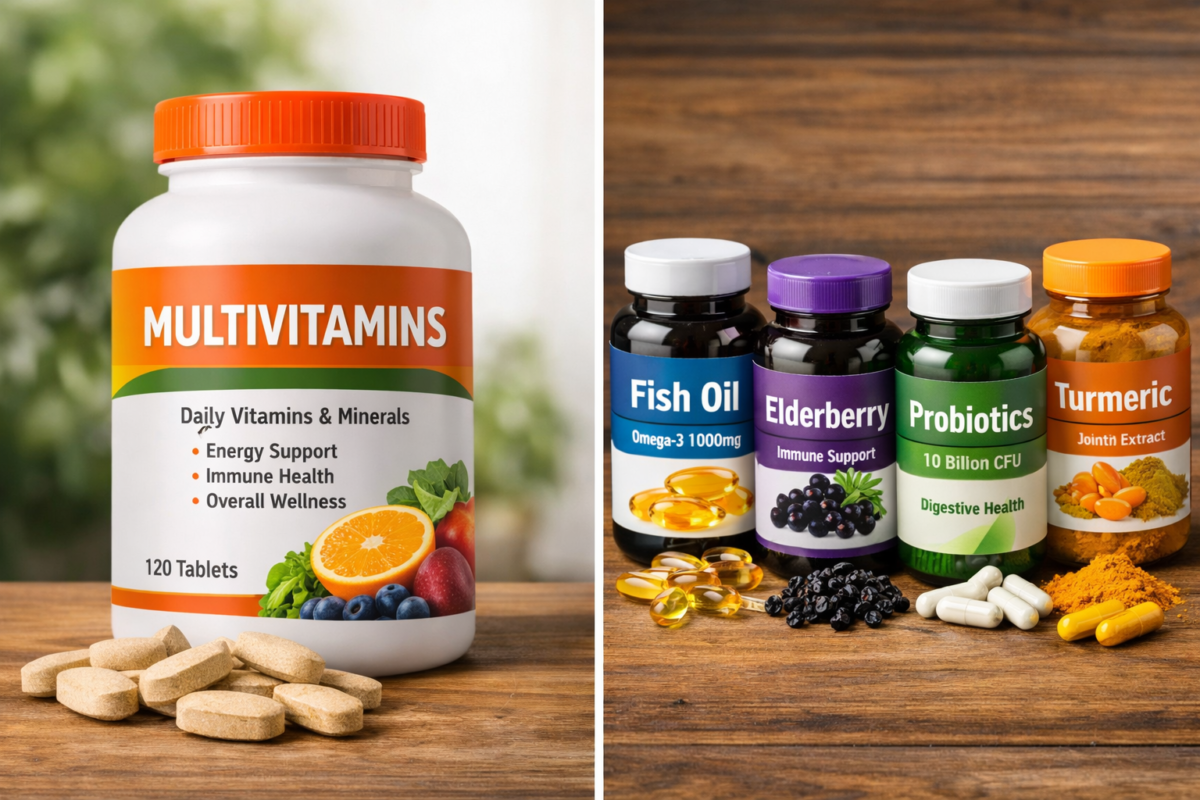
A multivitamin is a supplement that combines many different vitamins and minerals into a single tablet or gummy. It usually includes Vitamin A, Vitamin C, Vitamin D, Vitamin E, several B vitamins, calcium, iron, and zinc — all packed into one small pill. The idea is simple. Instead of taking ten different supplements every morning, you take just one and cover most of your nutritional bases at once.
A natural supplement, on the other hand, is made from a single source found in nature. Examples include fish oil for omega-3 fatty acids, elderberry extract for immunity, turmeric for reducing inflammation, and ashwagandha for managing stress. These supplements are closer to whole foods. They contain the original plant or animal compound in a concentrated form.
Think of it this way. A multivitamin is like a packed school lunch box — a little bit of everything in one container. A natural supplement is like a specialist food — one powerful ingredient chosen for one specific purpose.
Did you know? The global supplement industry is worth over 150 billion dollars. Yet research shows that most people still do not know the real difference between multivitamins and single-ingredient natural supplements before buying them.
When Multivitamins Are the Right Choice for Daily Nutritional Support
Multivitamins work best for certain types of people and lifestyles. Understanding when they make sense helps you avoid spending money on the wrong product.
Multivitamins are ideal for children and adults who eat an inconsistent diet. If your daily meals sometimes skip vegetables, dairy, or protein-rich foods, a multivitamin acts as a reliable safety net. It covers a wide range of nutrients in one go, which is both convenient and cost-effective.
They are also a smart first step for anyone who is just starting a supplement routine. Instead of researching ten different products, a quality children's or adults' multivitamin gives you broad coverage immediately. For busy families, this simplicity is a genuine advantage.
The Strengths of a Good Multivitamin
A well-formulated multivitamin covers your baseline nutritional needs at an affordable price. It removes the guesswork for people who are generally healthy but want a simple daily boost. In addition, taking one tablet instead of many reduces the chance of accidentally overdosing on any single nutrient.
However, multivitamins do have limits. Because they include so many nutrients in one tablet, each individual nutrient is often present in a moderate amount — sometimes not enough to correct a serious deficiency. For example, a multivitamin might contain only 400 IU of Vitamin D. However, a person with a diagnosed Vitamin D deficiency might need 2000 IU or more per day under medical supervision.
Therefore, multivitamins are excellent for maintenance and general prevention. They are less effective for treating a specific, identified nutrient gap.

When Natural Supplements Are the Better Option for Targeted Health Goals
Natural supplements shine brightest when your body has a specific, identified need. This is where they clearly outperform multivitamins in terms of impact and effectiveness.
Imagine your body is a car and the engine warning light comes on. A multivitamin is like a general car service — good for overall maintenance. A natural supplement is like fixing the specific engine part that triggered the warning light. It targets the exact problem with a much higher dose and focus.
For example, if a blood test reveals that your Vitamin D levels are very low, a dedicated Vitamin D3 supplement at the correct therapeutic dose will correct that deficiency far more effectively than the small amount found in a standard multivitamin.
Popular Natural Supplements and Their Specific Benefits
Fish oil supplements deliver high doses of omega-3 fatty acids for brain function, heart health, and reducing inflammation. Probiotic supplements target gut health and immune function directly. Elderberry extract provides concentrated antiviral plant compounds during cold and flu season. Turmeric with black pepper extract is widely used for joint comfort and reducing long-term inflammation in the body.
Each of these natural supplements does one or two things very well. They are precision tools rather than all-in-one solutions. In addition, many natural supplements come from whole food sources, which means the body sometimes recognizes and absorbs them more efficiently than purely synthetic compounds.
However, the main downside is cost and complexity. Covering all your nutritional bases with individual natural supplements means buying and managing multiple products. For a ten-year-old, that could easily mean five or six different bottles on the shelf — which is neither practical nor necessary.

Multivitamins vs Natural Supplements: Key Factors to Help You Decide
Now that you understand both options clearly, here is a simple framework to guide your decision. Ask yourself these three questions before making any choice.
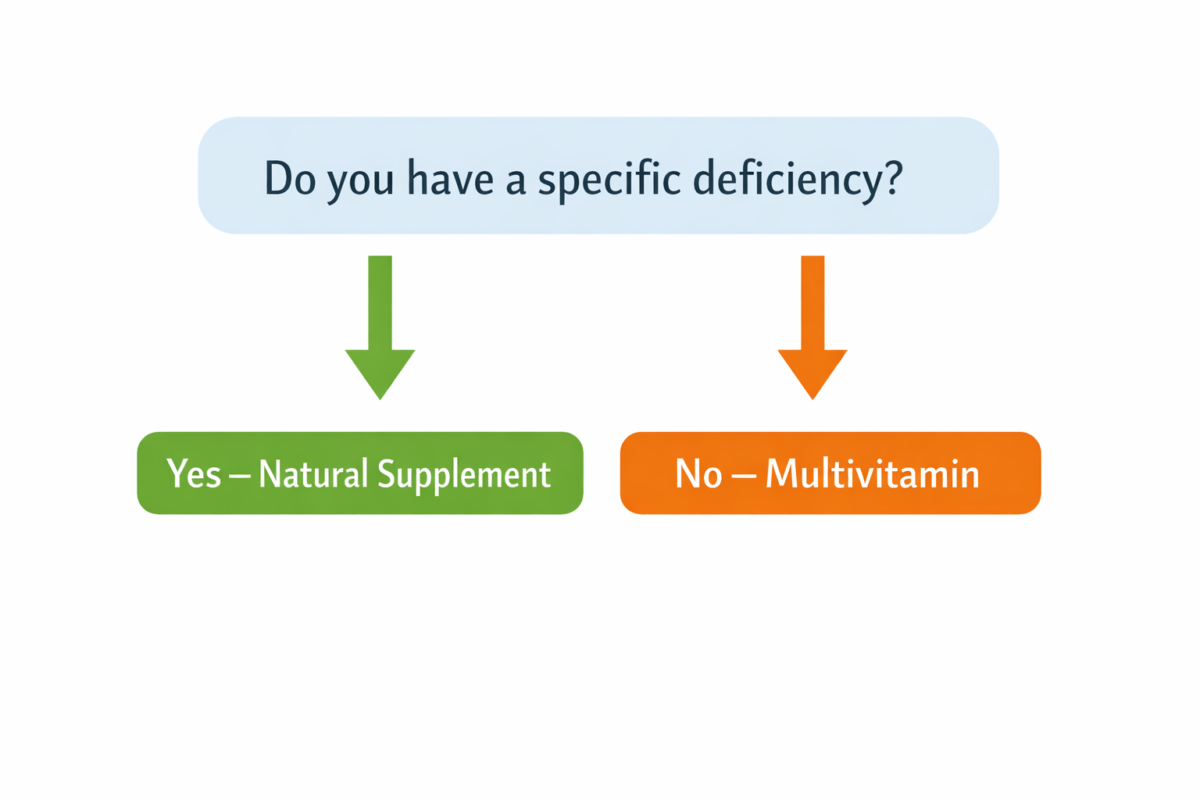
Question One: Do I Have a Specific Deficiency?
If a doctor has confirmed through a blood test that you are low in one particular nutrient, choose a dedicated natural supplement for that nutrient. It will correct the deficiency faster and more reliably. A multivitamin simply cannot match the concentrated dose that a targeted supplement delivers.
Question Two: Is My Overall Diet Generally Balanced?
If you eat a reasonably varied diet most days and simply want a health safety net, a multivitamin is the more sensible and affordable option. It covers the gaps without overdoing any single nutrient.
Question Three: What Is My Budget and Lifestyle?
Multivitamins are generally cheaper and far more convenient. One bottle lasts a month and requires only one tablet per day. Natural supplements, on the other hand, can add up quickly in cost when you need more than one or two. Therefore, for most families — especially those with children — a good-quality multivitamin combined with one or two targeted natural supplements is the most practical and effective strategy.
For authoritative, science-backed information on both types of supplements, visit the NIH Office of Dietary Supplements at ods.od.nih.gov. It is a free, government-run resource trusted by doctors and researchers worldwide.
You can also read our complete guide to choosing the right nutrition supplements for a step-by-step approach to building a supplement plan that matches your personal health goals.
How to Use Both Multivitamins and Natural Supplements Together Safely
Here is something many people do not realize. Multivitamins and natural supplements do not have to be opponents. Used together correctly, they can complement each other beautifully.
A common and sensible approach is to use a multivitamin as your daily foundation and add one or two natural supplements on top for specific goals. For example, a child might take a children's multivitamin every morning with breakfast and add an omega-3 fish oil capsule for brain health support during school term.
However, combining supplements requires some care. Certain nutrients interact with each other. Calcium reduces iron absorption when taken at the same time. Fat-soluble vitamins — A, D, E, and K — are stored in the body and can build up to harmful levels if you take them in large amounts from multiple sources simultaneously.
Therefore, always check the full nutrient content of your multivitamin before adding any natural supplement. If your multivitamin already contains 100 percent of your daily Vitamin D requirement, you probably do not need an additional Vitamin D supplement on top. Overlap is wasteful at best and harmful at worst.
When in doubt, always ask a pharmacist or doctor to review your supplement combination before starting. This step takes only a few minutes and can prevent unnecessary side effects.

Key Takeaways
| Topic | Key Point |
|---|---|
| Primary Keyword | Multivitamins vs natural supplements each serve different health purposes |
| Multivitamins | Best for general daily coverage, convenience, and budget-conscious families |
| Natural Supplements | Best for targeting specific, identified nutrient deficiencies |
| Combination Strategy | Use a multivitamin as a base and add one or two natural supplements for specific goals |
| Watch for Overlaps | Check nutrient totals across all products to avoid accidental overdosing |
| Always Seek Advice | A doctor or pharmacist can confirm the safest and most effective combination for you |
| Bottom Line | Neither option is universally better — your personal needs determine the right choice |
Frequently Asked Questions
Q1. Are multivitamins safe for children to take every day? Yes, children's multivitamins are formulated specifically for growing bodies and are safe when taken as directed. Always choose a product labeled for your child's age group. Adult multivitamins contain higher doses that are not suitable for children. When in doubt, ask your child's doctor for a recommendation.
Q2. Can natural supplements replace a multivitamin completely? They can, but only if you take enough individual natural supplements to cover all your nutritional needs. This approach becomes expensive and complicated quickly. For most people, a multivitamin covers the basics more conveniently, while natural supplements handle specific gaps on top of that foundation.
Q3. How do I know if a multivitamin or a natural supplement is working? Give any supplement at least four to six weeks of consistent daily use before judging its effectiveness. Signs that it is working include improved energy, better sleep, fewer illnesses, or improved focus. For confirmed deficiencies, a follow-up blood test after three months gives the most reliable, objective answer.
Make Your Choice with Confidence Today
The debate of multivitamins vs natural supplements does not have a single winner. Both have real strengths. Both have clear limitations. The right answer depends entirely on your individual health needs, your diet, your lifestyle, and your budget.
If you are generally healthy and want broad daily coverage, start with a trusted multivitamin. If you have a specific health goal or a confirmed deficiency, add a targeted natural supplement. If you are unsure about anything, a quick conversation with a doctor or pharmacist will always point you in the right direction.
Your health is worth making smart, informed decisions. Now you have the knowledge to do exactly that.
Tell us in the comments: Do you currently take a multivitamin, a natural supplement, or both — and what difference have you noticed?