


Blog
Protect Children from Seasonal Flu in Pakistan

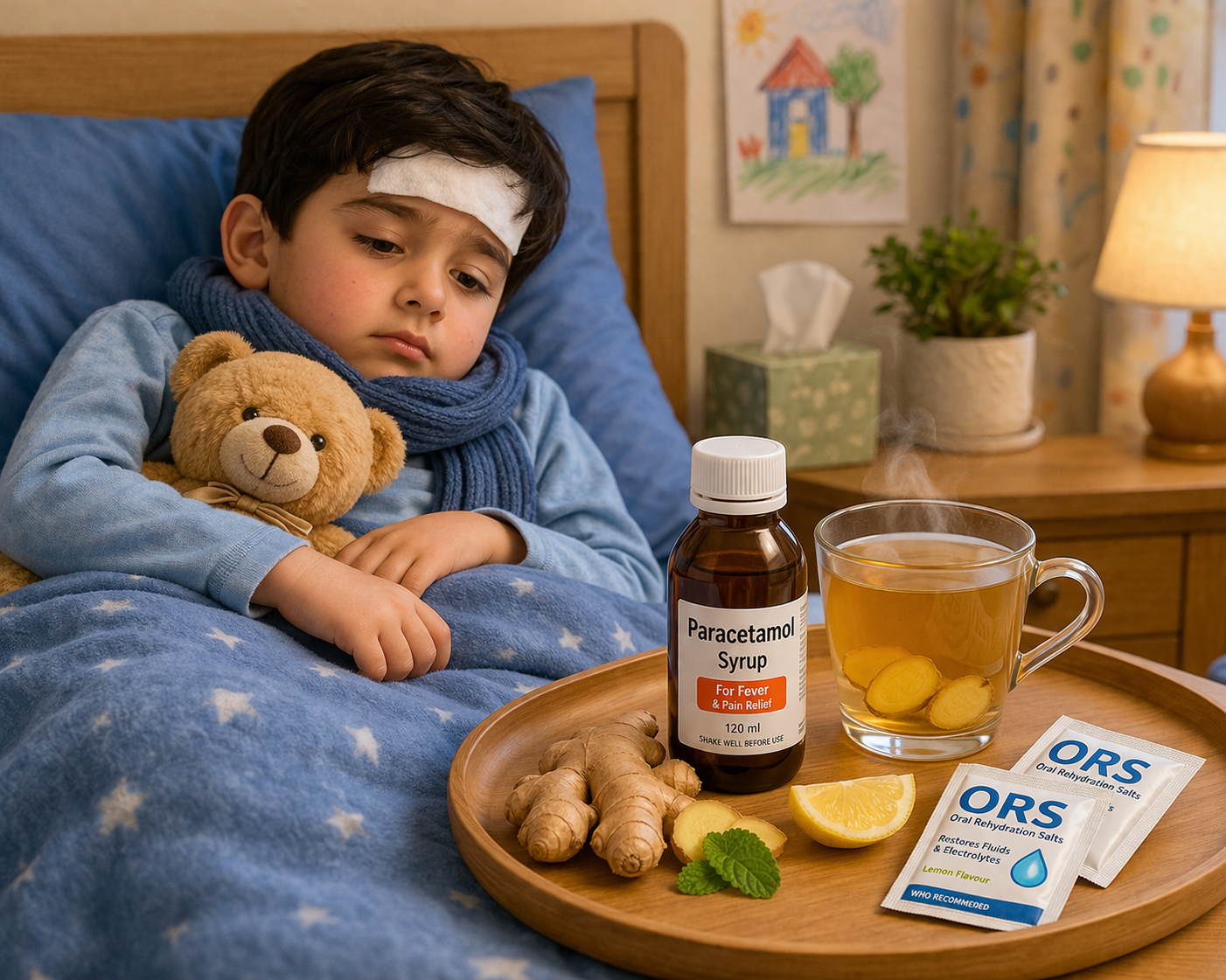
Think back to the last time your school had a wave of sick students. One child came in sneezing on Monday. By Friday, half the class was absent. Sound familiar? That is seasonal flu in action — and in Pakistan, it is one of the most common reasons children miss school, skip meals, and end up in bed for a whole week.
The good news is that protecting your child from seasonal flu in Pakistan is very possible. You do not need expensive medicines or fancy equipment. What you need is the right knowledge — and a few simple habits that actually work. Let us break it all down together, step by step.
What Is Seasonal Flu and When Does It Strike Pakistani Children?
Seasonal flu — also called influenza — is a viral infection that spreads very easily, especially among children. It is not the same as a common cold, even though they feel similar at first. Flu hits harder, faster, and lasts longer.
The flu virus travels through tiny droplets in the air. When a sick person sneezes or coughs, those droplets float around and land on surfaces — or go straight into the lungs of someone nearby. Children are especially vulnerable because they spend hours close together in classrooms, playgrounds, and school buses.
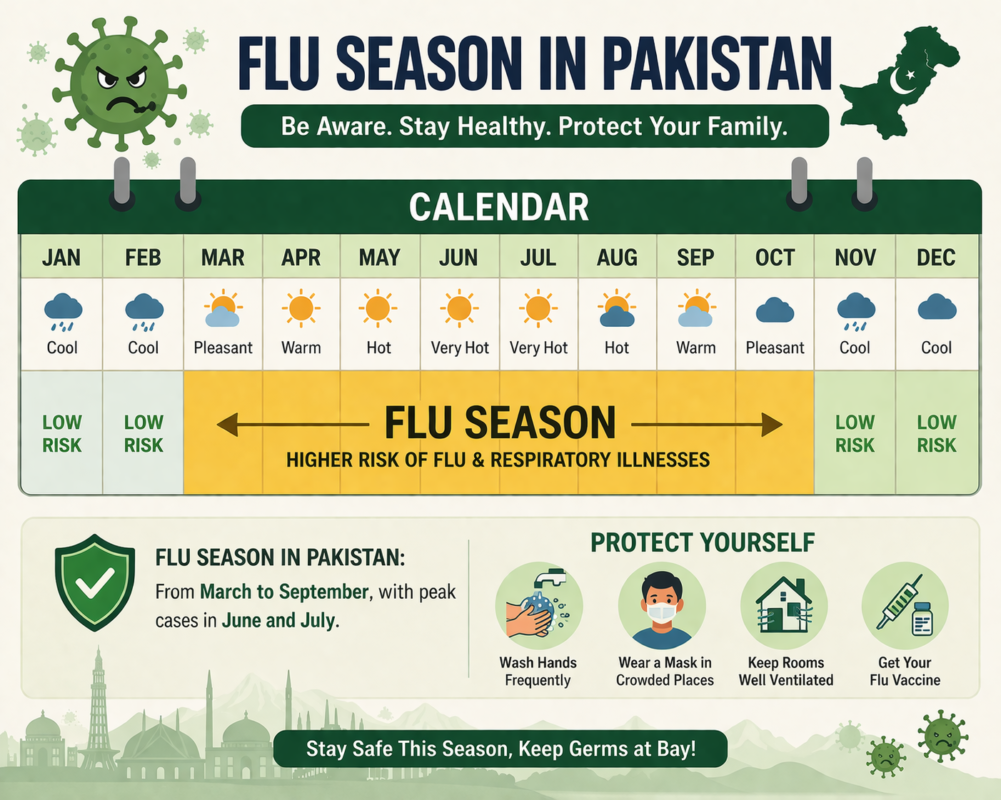
In Pakistan, seasonal flu follows a fairly predictable pattern:
- Winter flu season: November to February — cold, dry air helps the virus survive longer.
- Post-monsoon flu wave: September to October — humidity and temperature changes weaken immunity.
- Spring spike: March to April — rapid weather shifts confuse the body's defences.
Did you know? The influenza virus mutates — meaning it changes its shape — every year. This is why getting sick from flu once does not protect you forever. Your immune system has to learn to fight a slightly new version of the virus each season.
Recognising Seasonal Flu Symptoms in Children — Early Signs Pakistani Parents Must Know
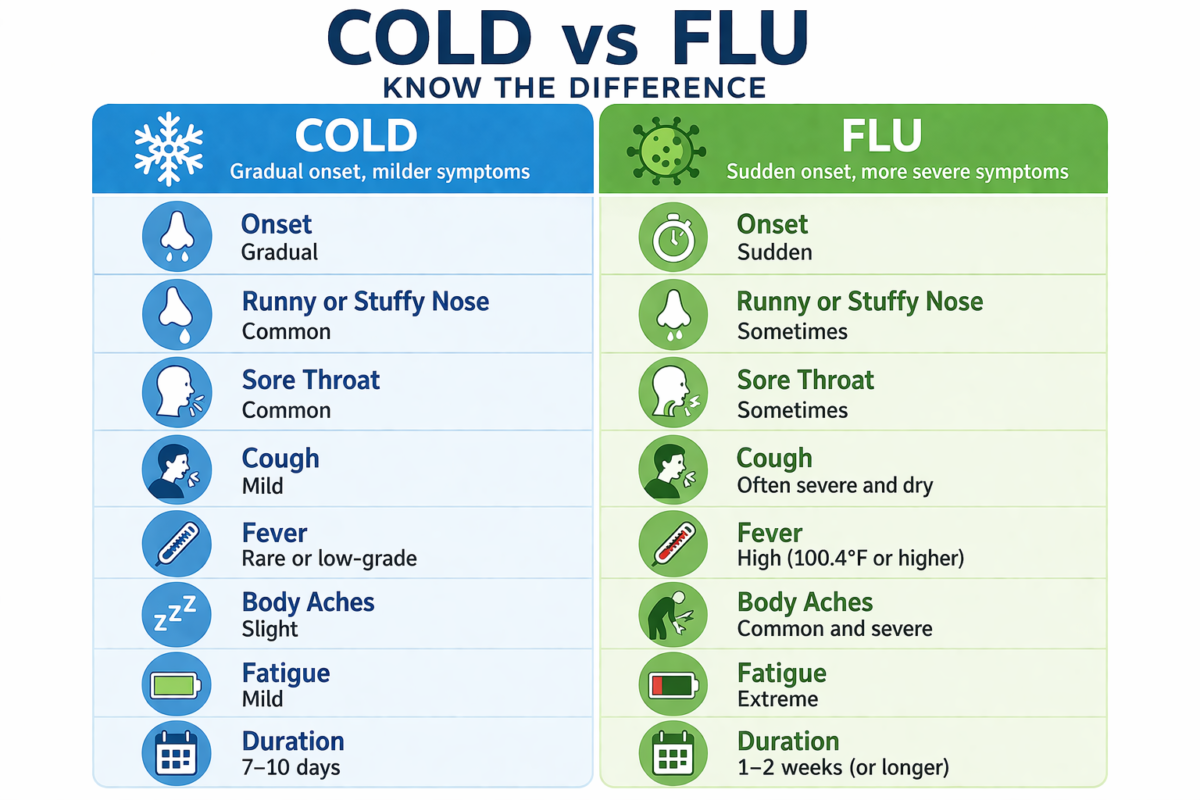
One of the biggest challenges with flu is that parents sometimes mistake it for a simple cold and delay treatment. However, spotting flu early makes recovery much faster. Here is how to tell the difference:
Flu vs. Cold — A Quick Comparison
| Symptom | Cold | Flu |
|---|---|---|
| Fever | Mild or none | High (39°C–40°C), sudden |
| Body aches | Rare | Common and severe |
| Tiredness | Mild | Extreme — child cannot get up |
| Runny nose | Very common | Mild |
| Headache | Rare | Common |
| Onset | Gradual over 2–3 days | Sudden — like a switch |
Warning Signs That Need a Doctor Immediately
Most flu cases in children get better at home. However, see a doctor right away if your child shows:
- Breathing that is very fast or laboured (struggling to breathe)
- Blue or greyish lips or fingernails — this means not enough oxygen
- Extreme confusion or unusual drowsiness
- Fever that returns after improving, with a worse cough
- Vomiting so much that the child cannot keep fluids down
These signs can indicate flu complications like pneumonia — a serious lung infection that sometimes follows severe flu in young children.
How to Protect Children from Seasonal Flu — Proven Prevention Strategies for Pakistani Families
Prevention is always better than cure. Here are the most effective, practical ways to protect children from seasonal flu in Pakistan — strategies that any family can follow, regardless of budget.
Hand Washing — Your Child's Number One Defence
The flu virus lives on surfaces for up to 24 hours. Children touch doorknobs, desks, phones, and shared stationery all day. Then they touch their face — and that is how the virus gets in.
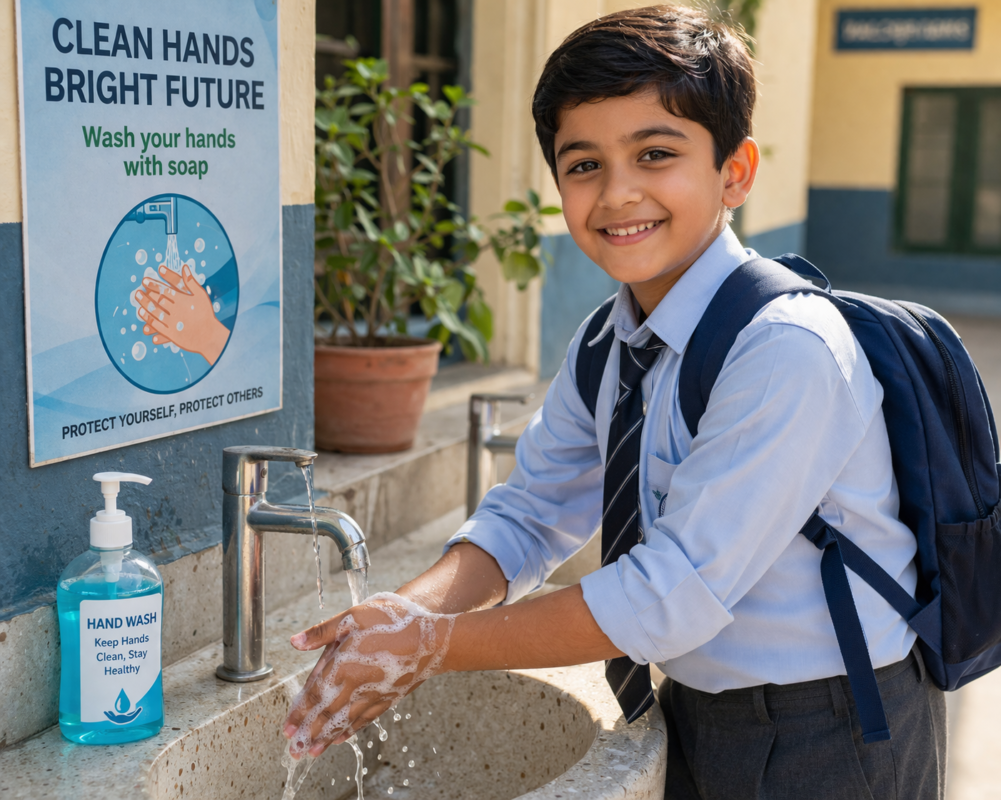
Teaching children to wash hands properly is genuinely one of the most powerful flu prevention tools available. The correct technique takes 20 seconds — about the time it takes to sing the alphabet song once. Wash before eating, after the toilet, after coming home from school, and after sneezing or coughing.
When soap and water are not available, an alcohol-based hand sanitiser (at least 60% alcohol) works very well as a backup.
The Flu Vaccine — Pakistan's Most Underused Protection Tool
The influenza vaccine is safe, effective, and available across Pakistan every year. It is recommended annually for:
- All children aged 6 months and older
- Children with asthma, diabetes, or heart conditions — who face higher risk from flu complications
- Elderly family members who live with young children
The flu vaccine does not give you flu. It teaches your immune system to recognise and fight the virus before it can make you sick. Think of it as a training exercise for your body's army — no real battle, just preparation.
Vaccination is available at most government hospitals, private clinics, and many pharmacies across Pakistan. The best time to vaccinate is October or November — just before the winter flu season begins.
Keep Sick Children Home from School
This sounds simple. However, many families send sick children to school because of missed lessons or exams. This is actually how flu spreads fastest — one sick child can infect 5 to 10 classmates in a single day.
A child with flu is most contagious in the first 3–4 days of illness. Keeping them home during this period protects dozens of other children. Most children are safe to return to school 24 hours after their fever breaks — without the use of fever medicine.
Improve Indoor Air Quality at Home and School
The flu virus thrives in poorly ventilated spaces. Open windows during cooler parts of the day to let fresh air circulate. Avoid overcrowding in small rooms. If someone at home has flu, encourage them to sleep in a separate room if possible and to sneeze into a tissue or their elbow — never into open air.
Safe Medicines and Home Care for Children with Seasonal Flu in Pakistan
Even with the best prevention, children sometimes still catch flu. When that happens, the right home care makes a huge difference.
What to Give
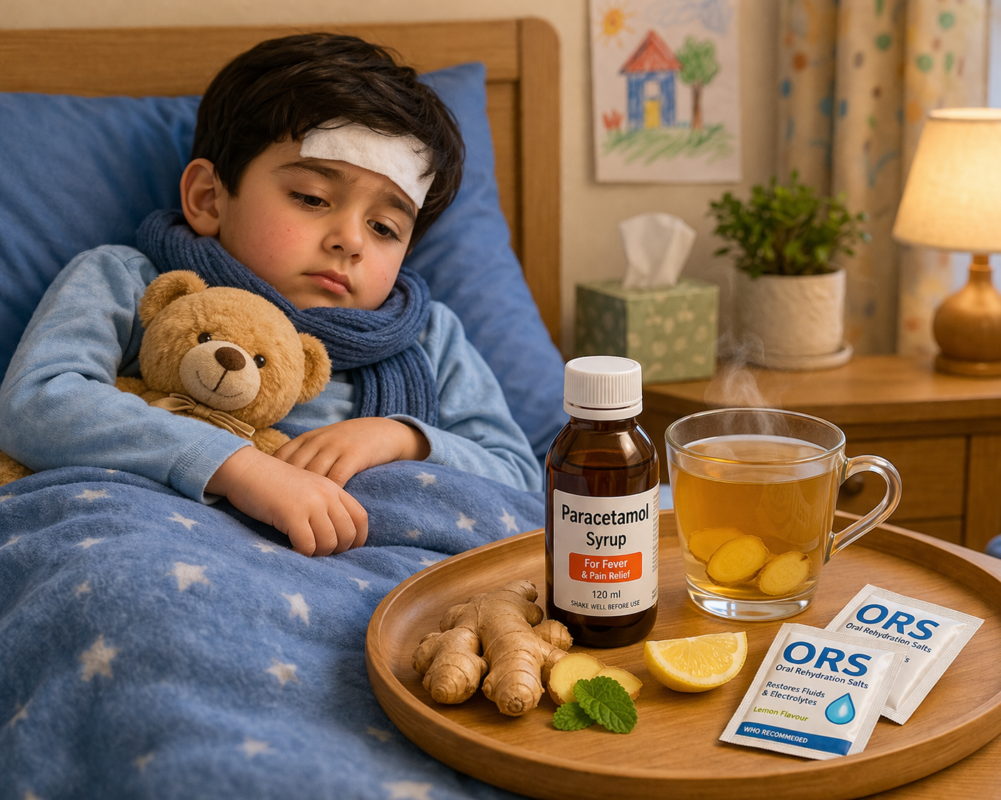
- Paracetamol (Calpol / Panadol syrup): Reduces fever and relieves body aches. This is the first-line treatment for flu in children. Always use the correct dose for the child's weight.
- ORS (Oral Rehydration Salts): Flu causes sweating and reduced eating. ORS prevents dehydration and keeps energy levels from crashing.
- Saline nasal drops: Helps clear a blocked nose safely, even in babies.
- Warm fluids: Chicken soup, warm milk with honey, and herbal teas with ginger help soothe the throat and keep the body hydrated.
- Rest: This is not optional! Sleep is when the immune system works hardest. A child with flu needs 10–12 hours of rest per day.
What to Avoid
- Aspirin — dangerous for children under 16. It can cause Reye's Syndrome, a life-threatening brain and liver condition.
- Antibiotics — flu is caused by a virus. Antibiotics fight bacteria, not viruses. Using them unnecessarily creates antibiotic resistance over time.
- Skipping fluids — even if the child says they are not thirsty, dehydration during flu is a serious risk.
The Power of Pakistani Kitchen Remedies
Traditional home remedies used across Pakistani homes are not just old habits — many are backed by real science:
- Ginger and honey tea: Ginger reduces inflammation. Honey soothes the throat and has antimicrobial properties.
- Haldi (turmeric) milk: Warm milk with a pinch of turmeric is a tried-and-true anti-inflammatory remedy.
- Steam inhalation: Breathing warm steam loosens mucus and makes breathing easier. Always supervise children — hot water is a burn risk.
- Garlic in food: Garlic's active compound, allicin, has natural antiviral properties. Adding it to soups and daal is an easy, delicious immune boost.
Building Long-Term Flu Resistance — Lifestyle Habits That Protect Pakistani Children All Year
Medicine and vaccines help during flu season. However, the strongest protection comes from a healthy lifestyle maintained all year round. Here is what works:
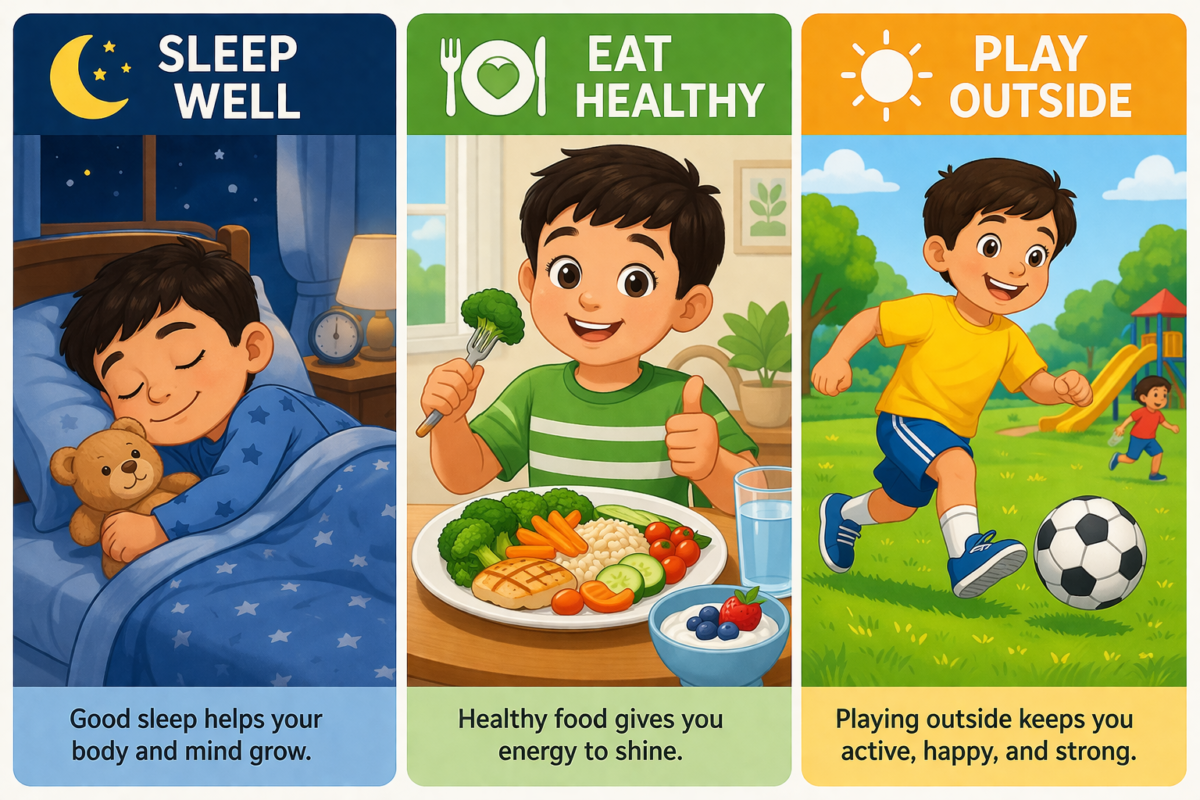
- Balanced diet: Make sure children eat iron-rich foods (spinach, red meat, lentils), Vitamin C-rich fruits (guavas, oranges), and protein (eggs, dairy) every day. A well-nourished child has a significantly stronger immune response.
- Adequate sleep: Children aged 6–12 need 9–11 hours of sleep per night. Less sleep directly weakens the immune system.
- Regular outdoor activity: Playing outside in fresh air strengthens lungs and overall immunity. Aim for at least 60 minutes of physical activity daily.
- Limit sugar and junk food: Excess sugar suppresses white blood cell activity for several hours after consumption. Reducing chips, biscuits, and cold drinks — especially during flu season — makes a real difference.
- Emotional wellbeing: Stress and anxiety can weaken immunity even in children. Encourage open conversation, relaxed play, and enough downtime after school.
Key Takeaways: Your Seasonal Flu Protection Plan
Key Takeaways Box
| Topic | What to Remember |
|---|---|
| What is seasonal flu? | A viral infection stronger than a cold — spreads fast among children |
| Peak flu season in Pakistan | Nov–Feb (winter) and Sep–Oct (post-monsoon) |
| Top prevention tools | Handwashing, flu vaccine, keeping sick kids home |
| Flu vaccine | Safe, annual, available across Pakistan — best in October/November |
| Best medicines | Paracetamol + ORS + saline drops + rest |
| Never give | Aspirin (dangerous!) or antibiotics without a doctor |
| Home remedies that help | Ginger tea, turmeric milk, steam, garlic in food |
| Year-round protection | Good diet, 9–11 hrs sleep, outdoor play, reduce junk food |
FAQ: Seasonal Flu in Pakistani Children — Quick Answers
Q1. How often should my child get the flu vaccine in Pakistan? Every year. The influenza virus changes its form annually, so last year's vaccine does not fully protect against this year's strain. Get the flu shot every October or November before the winter season begins. It is safe for children from 6 months of age onwards.
Q2. My child gets flu every single winter. What am I doing wrong? You are probably not doing anything wrong — some children simply have lower immunity due to nutritional gaps, lack of sleep, or frequent exposure at school. Focus on year-round habits: better nutrition, regular sleep, daily outdoor play, and annual vaccination. Consider asking a doctor to check Vitamin D and iron levels, as deficiencies are very common in Pakistan and directly affect flu resistance.
Q3. Can the flu spread through sharing food or drinks? Yes, it can! The flu virus lives in saliva and mucus. Sharing cups, spoons, or food with a sick person is a direct way to catch it. Teach children not to share drinks or utensils during flu season — even with close friends.
Conclusion: Be Your Child's First Line of Defence Against Seasonal Flu in Pakistan
Seasonal flu in Pakistan affects millions of children every year. However, it does not have to disrupt your child's school year, health, or happiness. By combining the right prevention habits — handwashing, annual vaccination, proper nutrition, and good sleep — with smart home care when flu strikes, you give your child a genuinely powerful shield.
Remember: protecting children from seasonal flu in Pakistan starts with you. One small habit — like reminding your child to wash hands after school — can prevent days of illness, missed lessons, and unnecessary suffering.
You now know exactly what to do. Start today, and this flu season will be your family's healthiest one yet!
Call to Action
Try this today! Teach your child the 20-second handwashing technique right now. Time them with a stopwatch and make it a fun challenge. Then mark October on your family calendar as "flu vaccine month"!
Tell us in the comments: Does your school have a handwashing routine? We would love to hear how Pakistani schools are keeping children safe!
This article is for educational purposes only. Always consult a qualified paediatrician or healthcare professional for personalised medical advice for your child.