


Blog
Flu, Fever or Viral? Must-Have Medicines in Pakistan

Picture this. It is a cold January morning in Lahore. Your little sister wakes up crying. Her forehead feels like a hot iron. Mum rushes to the medicine cabinet — and it is empty. No paracetamol. No ORS. Nothing. Sound familiar?
This happens in thousands of Pakistani homes every single year. Whether it is flu, fever, or a viral infection, being unprepared can turn a small illness into a big problem. The good news? Keeping just a few key medicines at home can make all the difference. Today, we will learn exactly which medicines every Pakistani home should keep — in the simplest, friendliest way possible.ioooooooo
Flu, Fever, and Viral Infections — What Is the Difference?
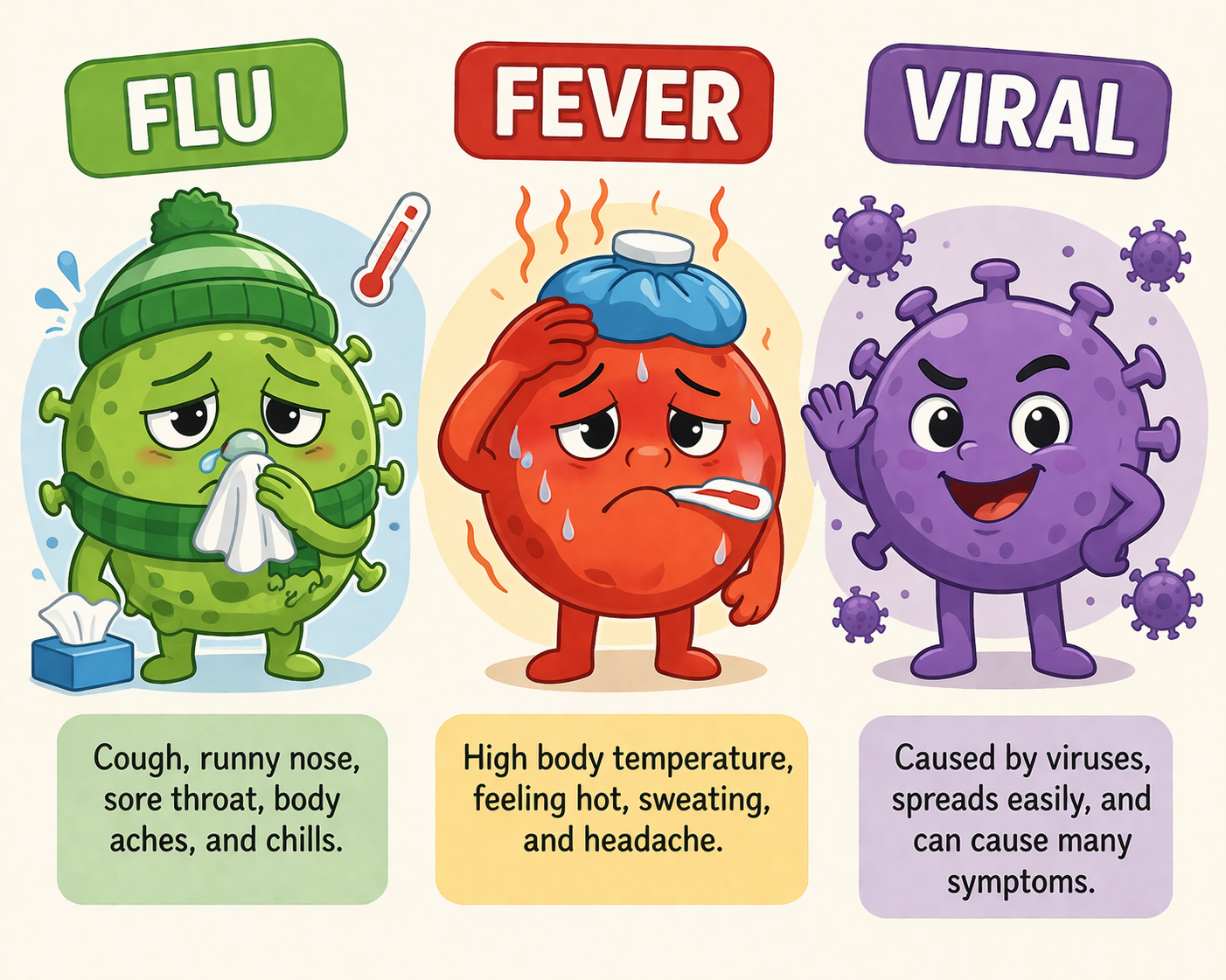
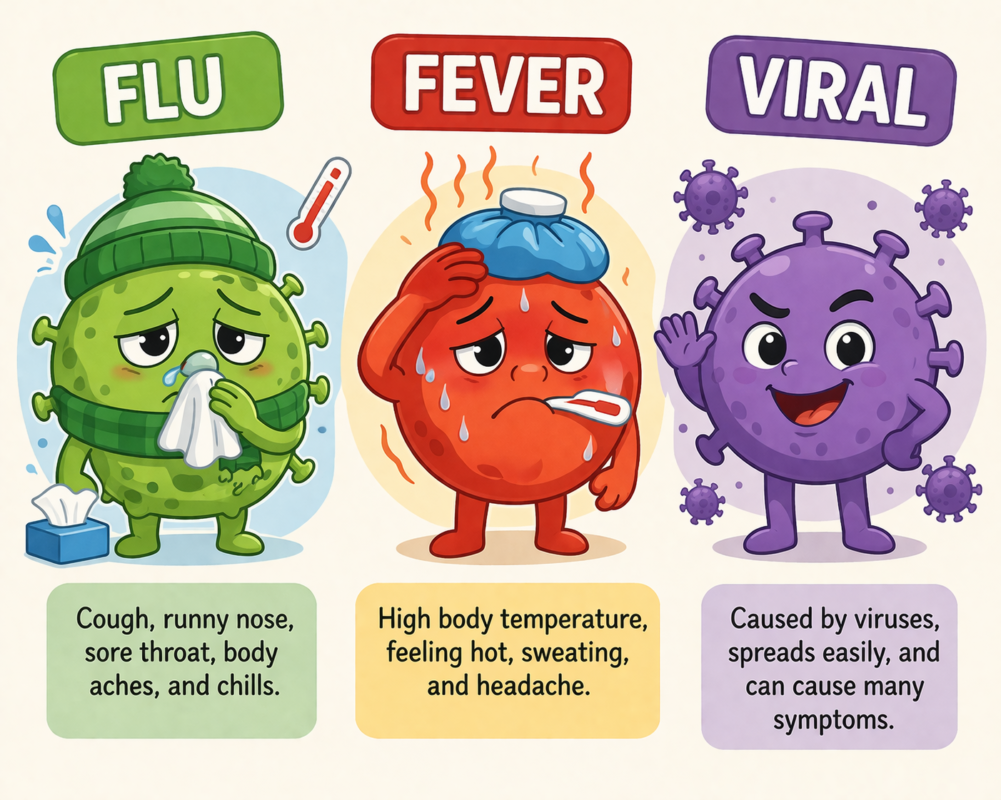
Before we talk about medicines, let us understand what we are dealing with. Many people mix up these three things. However, they are slightly different.
Fever
Fever is not an illness by itself. It is your body's reaction to a problem. Think of it like a fire alarm. When germs enter your body, your immune system (your body's army) turns up the heat to fight them off. A temperature above 100.4°F (38°C) is considered a fever.
Flu (Influenza)
Flu, short for influenza, is caused by the influenza virus. It hits hard and fast — sudden high fever, body aches, chills, and a very runny nose. It is much stronger than a common cold. In Pakistan, flu cases rise sharply during winter (November to February) and after the monsoon season.
Viral Infection
A viral infection is any illness caused by a virus. Flu is one type of viral infection. Others include the common cold, viral fever, and even dengue. Viruses are tiny invaders — like invisible enemy soldiers — that attack your body's cells.
Did you know? Antibiotics — medicines like Amoxicillin — do not work on viruses. They only fight bacteria (a different type of germ). Using antibiotics for flu or viral fever is actually harmful! Always ask a doctor first.
Must-Have Medicines for Flu and Fever in Every Pakistani Home
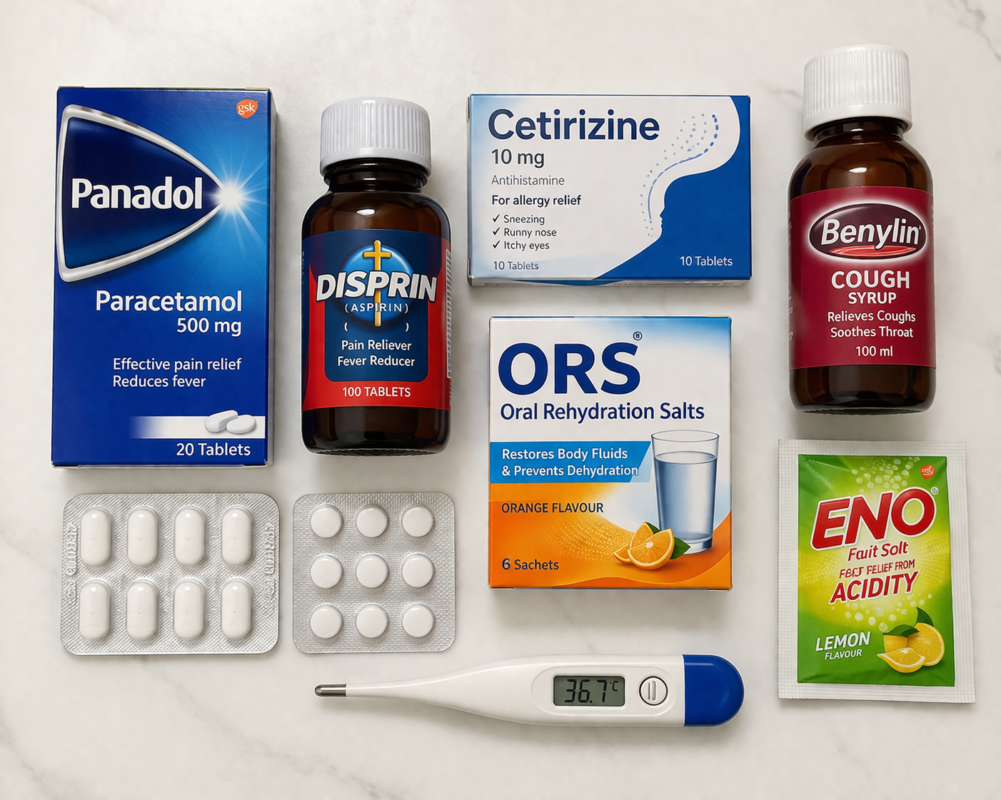
Now for the most important part! Here is a simple, safe list of medicines that Pakistani families — especially those with children — should always keep at home. These are commonly available at any pharmacy across Pakistan.
1. Paracetamol (Panadol / Calpol / Febrol)
This is the king of home medicines. Paracetamol reduces fever and relieves mild pain — like headaches and body aches. It is safe for children and adults when used in the correct dose.
- Children's dose: Always check the packet for the child's weight and age.
- Adult dose: Usually 500mg–1000mg every 6–8 hours.
- Never give more than the recommended amount. More is not better — it can harm the liver.
2. ORS — Oral Rehydration Salts (Pedialyte / Qumre / ORS Sachets)
When you have fever, flu, or diarrhoea, your body loses water and important salts very fast. Dehydration — meaning losing too much body fluid — makes you feel much worse. ORS is a simple powder you mix with water. It puts those salts back into your body quickly.
Think of ORS as a sports drink for sick people — it re-energises your body from the inside!
3. Antihistamine for Runny Nose and Allergies (Claritin / Phenergan)
Flu and viral infections often come with a blocked or runny nose. An antihistamine (an-ti-HIS-ta-meen) helps dry up that runny nose and reduces sneezing. Phenergan syrup is widely used for children in Pakistan. However, it causes drowsiness — so give it at night.
4. Cough Syrup (Benadryl / Actifed)
A dry, tickly cough is common during flu and viral fever. A good cough syrup helps soothe the throat and calm the cough. Benadryl is a trusted option available everywhere in Pakistan.
5. Saline Nasal Drops (Iliadin / Nasonex / Plain Saline)
For blocked noses — especially in babies and young children — saline nasal drops are a lifesaver. They are basically salt water in a bottle. They soften the mucus (the thick stuff blocking your nose) and make breathing easier. They are 100% safe for all ages.
6. Digital Thermometer
Not a medicine, but absolutely essential! You cannot manage a fever if you cannot measure it. A digital thermometer is cheap, fast, and easy to use. Keep one in every home.
Medicines to Avoid — Common Mistakes Pakistani Families Make
Knowing what not to give is just as important. Many families in Pakistan make these common mistakes. Therefore, let us clear them up right now.
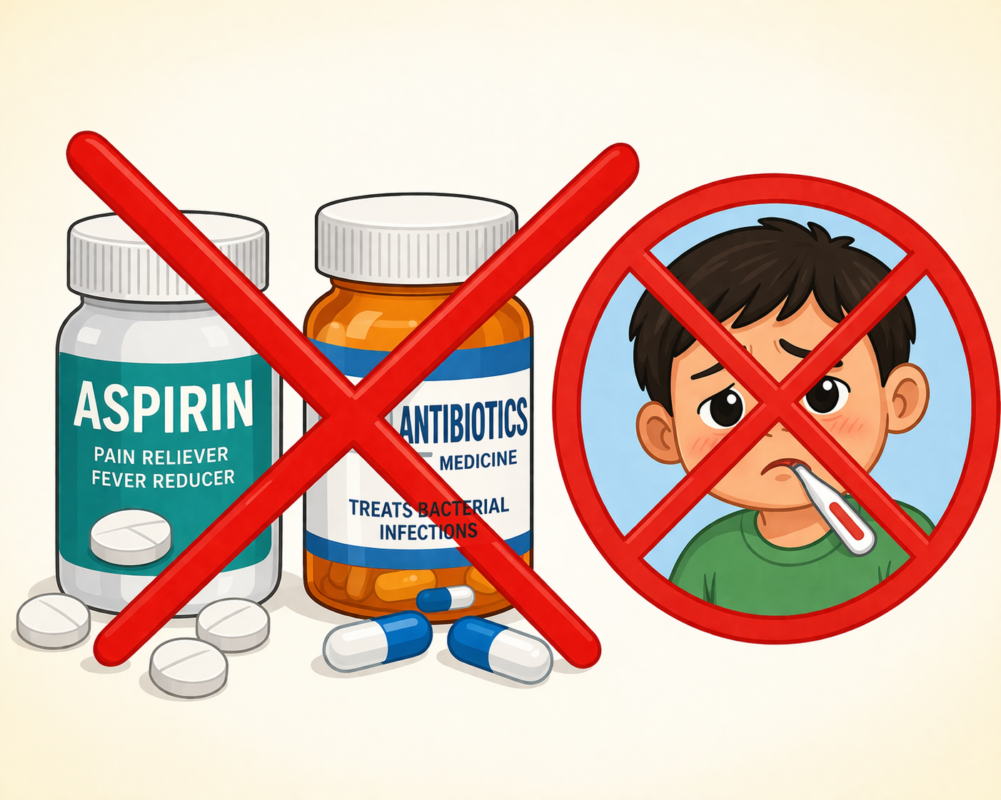
Do NOT Give Aspirin to Children
Aspirin is dangerous for children under 16 years old. It can cause a rare but very serious condition called Reye's Syndrome, which affects the brain and liver. Always choose paracetamol instead.
Do NOT Use Antibiotics Without a Doctor's Prescription
This is one of the biggest problems in Pakistan. Many people buy antibiotics like Augmentin or Amoxicillin without a doctor's advice. However, antibiotics do not kill viruses. They only work on bacterial infections. Overusing antibiotics makes them stop working over time — for everyone. This is called antibiotic resistance, and it is a global health crisis.
Do NOT Double the Dose to "Get Better Faster"
More medicine does not mean faster recovery. Giving double doses of paracetamol or cough syrup can seriously harm the liver and kidneys. Always follow the instructions on the packet.
Home Remedies That Actually Help Alongside Flu and Fever Medicines
Medicine is important. However, home care is equally powerful. Here are some simple, proven home remedies that work beautifully alongside medicines:
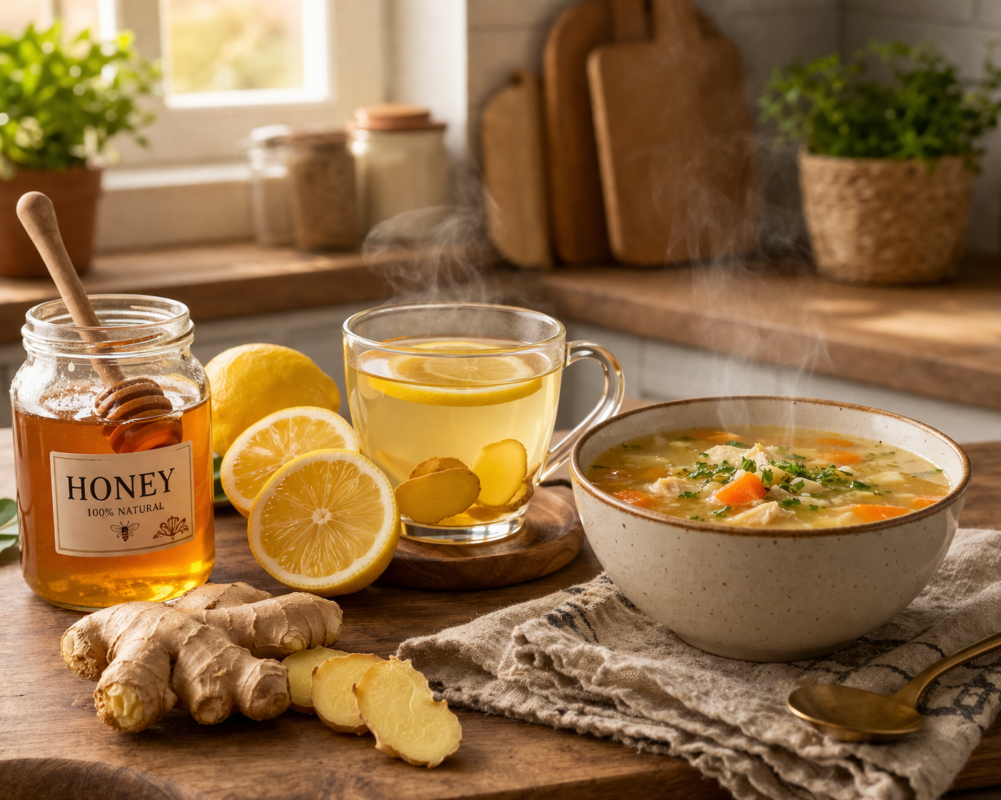
- Warm water with honey and lemon: Honey soothes a sore throat. Lemon gives vitamin C, which helps the immune system.
- Ginger tea (Adrak chai): Ginger reduces inflammation and warms the body. It has been used in Pakistani homes for centuries!
- Steam inhalation: Breathing in warm steam helps open a blocked nose. Ask a parent to help — the water is hot, so be careful.
- Complete rest: Sleep is when your body does its best healing work. Think of rest as free medicine!
- Warm soup (Yakhni / Chicken broth): Light, warm soups keep you hydrated and give your body easy-to-digest energy.
In addition, keep the sick person warm but not too hot. Open a window slightly for fresh air. Germs love stuffy, closed rooms.
When Should You See a Doctor? Recognising Serious Warning Signs
Home medicines and rest work well for mild flu and fever. However, some situations need a real doctor — and fast. Watch out for these serious warning signs:
- Fever stays above 103°F (39.4°C) for more than 3 days
- The child becomes very drowsy or cannot be woken easily
- Difficulty breathing or fast breathing
- Rash appearing on the skin alongside fever
- No improvement after 5–7 days
- Vomiting repeatedly, unable to keep fluids down
If you notice any of these signs, do not wait. Visit your nearest clinic, hospital, or general physician immediately. In Pakistan, you can also reach the Sehat Sahulat helpline for guidance.

Key Takeaways: Your Home Medicine Checklist
Key Takeaways Box
| Medicine / Item | What It Does | Safe for Children? |
|---|---|---|
| Paracetamol | Reduces fever and pain | Yes (correct dose) |
| ORS Sachets | Prevents dehydration | Yes (all ages) |
| Antihistamine Syrup | Stops runny nose, sneezing | Yes (ask doctor for dose) |
| Cough Syrup | Soothes cough and throat | Yes (check age on label) |
| Saline Nasal Drops | Unblocks nose safely | Yes (even babies) |
| Digital Thermometer | Measures fever accurately | Essential for all homes |
| Aspirin | AVOID for children | No — dangerous |
| Antibiotics | Only for bacterial infections | Doctor's prescription only |
FAQ: Quick Answers About Flu, Fever, and Viral Infections
Q1. How do I know if my child has flu or just a common cold? Flu hits suddenly and hard — high fever, body aches, and tiredness. A cold usually starts slowly with a runny nose and mild cough, but no high fever. If your child can barely get out of bed, it is probably flu.
Q2. How long does a viral fever last in children? Most viral fevers in children last 3 to 5 days. With paracetamol, ORS, rest, and fluids, children usually recover well at home. However, if the fever goes beyond 5 days, always visit a doctor.
Q3. Can I give my child two different medicines at the same time? Be very careful with this. Never give two medicines that contain the same ingredient — for example, two different brands of paracetamol at once. Always read labels carefully and ask a pharmacist or doctor when in doubt.
Conclusion: Build Your Home Medicine Kit Today!
Now you know the truth about flu, fever, and viral infections — and exactly which medicines every Pakistani home should keep ready. You do not need a huge, expensive medicine box. Just a few smart, safe choices can protect your whole family.
Remember: paracetamol and ORS are your best friends. Avoid antibiotics unless a doctor says so. Watch for warning signs. And never underestimate the power of rest, warm soup, and a caring family!
Flu, fever, or viral — with the right medicines and knowledge, you are always ready.
Call to Action
Try this today! Go check your home medicine cabinet right now. Is it stocked with paracetamol, ORS, and a thermometer? If not, ask a parent to pick them up from the pharmacy this week.
Tell us in the comments: Which home remedy does your family use when someone gets sick? We would love to hear it! 💬