Health

Seasonal & Viral Health Guide for Kids

Have you ever wondered why you catch a cold every winter but not in summer? Or why your whole class seems to get sick at the same time? That's all about seasonal and viral health — and once you understand it, you can actually protect yourself and your friends. Let's explore together! 

What Is Seasonal & Viral Health? Understanding How Viruses Spread

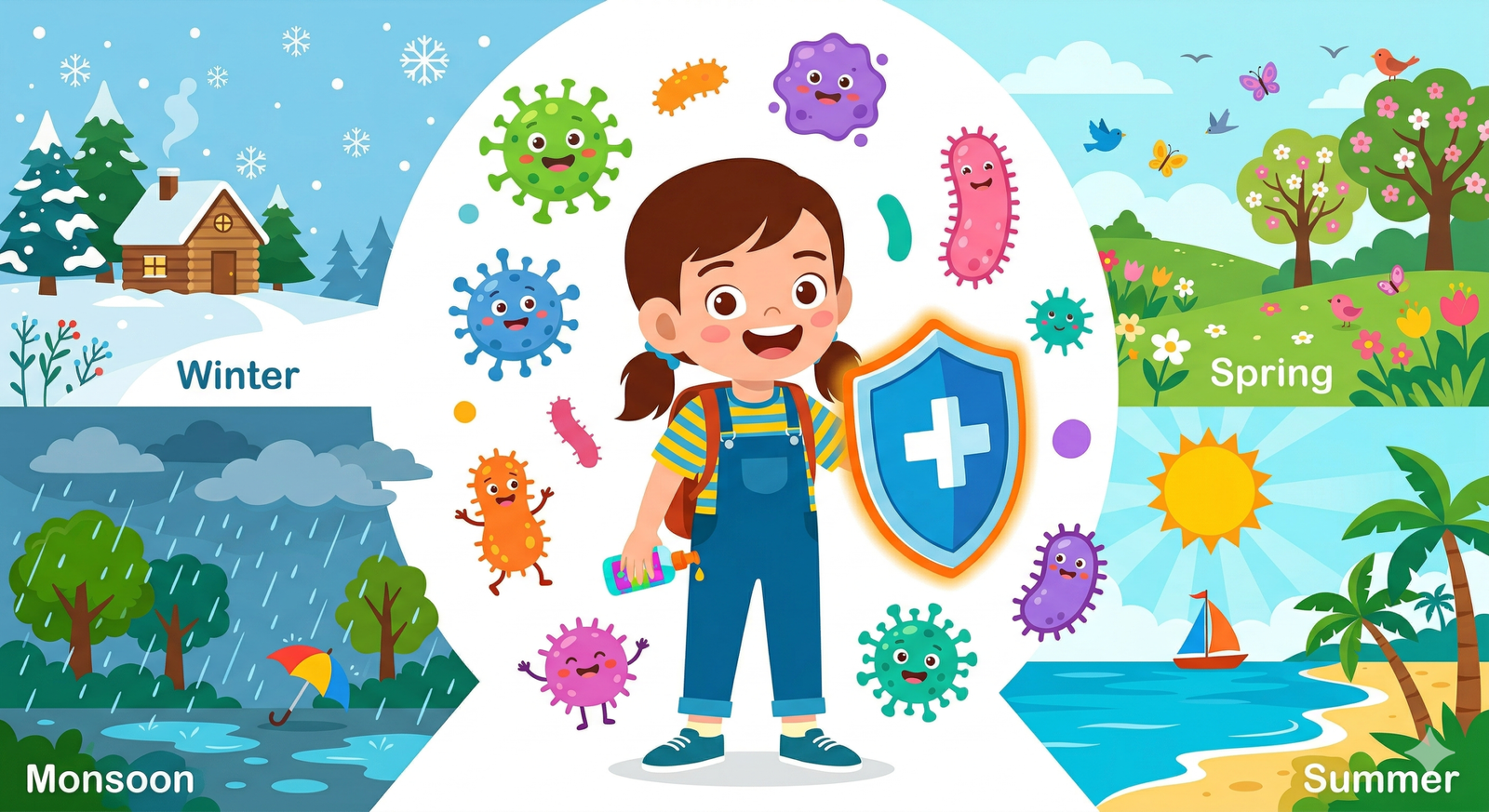
"Seasonal health" means how your body reacts to different times of the year — like winter, summer, or monsoon. "Viral health" is about viruses (say: VY-russ-ez). A virus is a teeny-tiny germ, much smaller than a grain of sand. You can't see it, but it can make you feel awful.

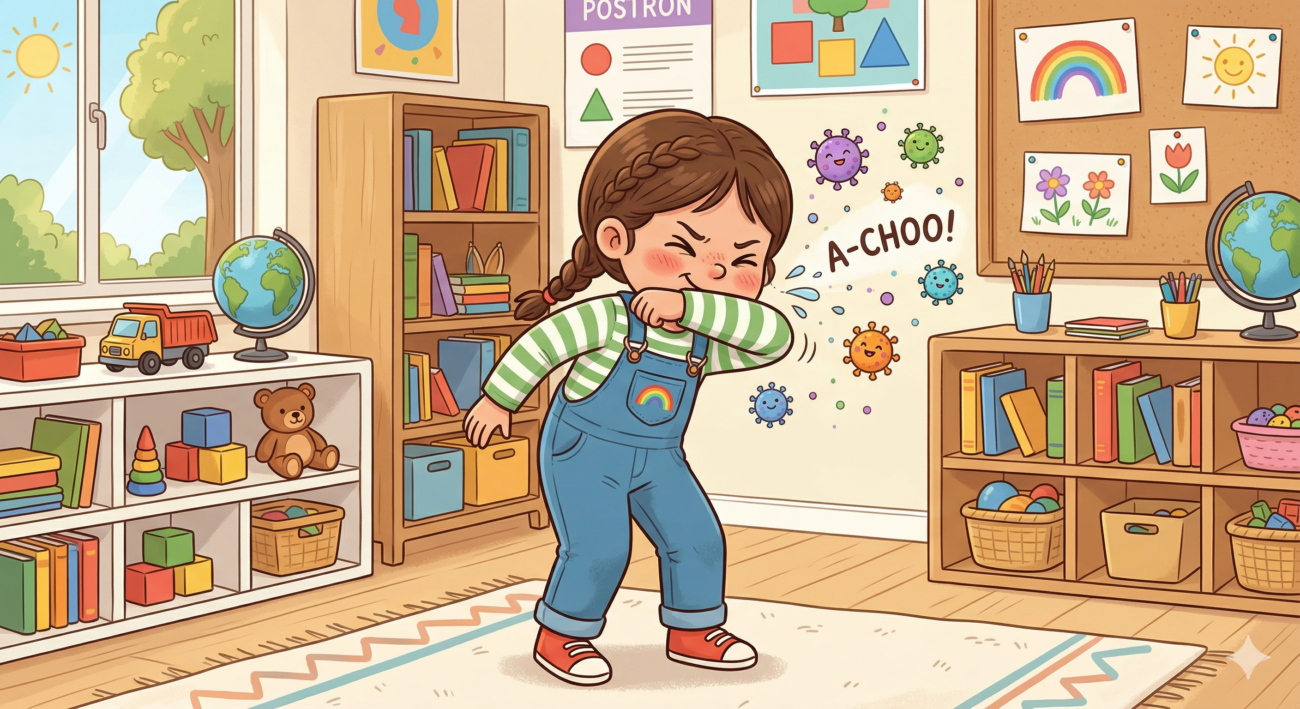
Viruses spread from person to person. When someone sneezes, tiny droplets fly into the air. If you breathe them in, the virus can enter your body. That's called transmission — the way a virus travels. Think of it like passing a note in class, except the "note" makes you sneeze!

Common seasonal illnesses include the cold, the flu (influenza), and stomach bugs. They show up more during certain seasons because of changes in weather, humidity, and how much time we spend indoors near other people.

The common cold can be caused by over 200 different viruses! The most common one is called the rhinovirus (ry-no-VY-russ). "Rhino" means nose — and yes, that's exactly where it likes to cause trouble.

Why Seasonal Illness Peaks in Winter & Monsoon

You might wonder: "Why do I always catch a cold in winter?" Great question! There are a few reasons.

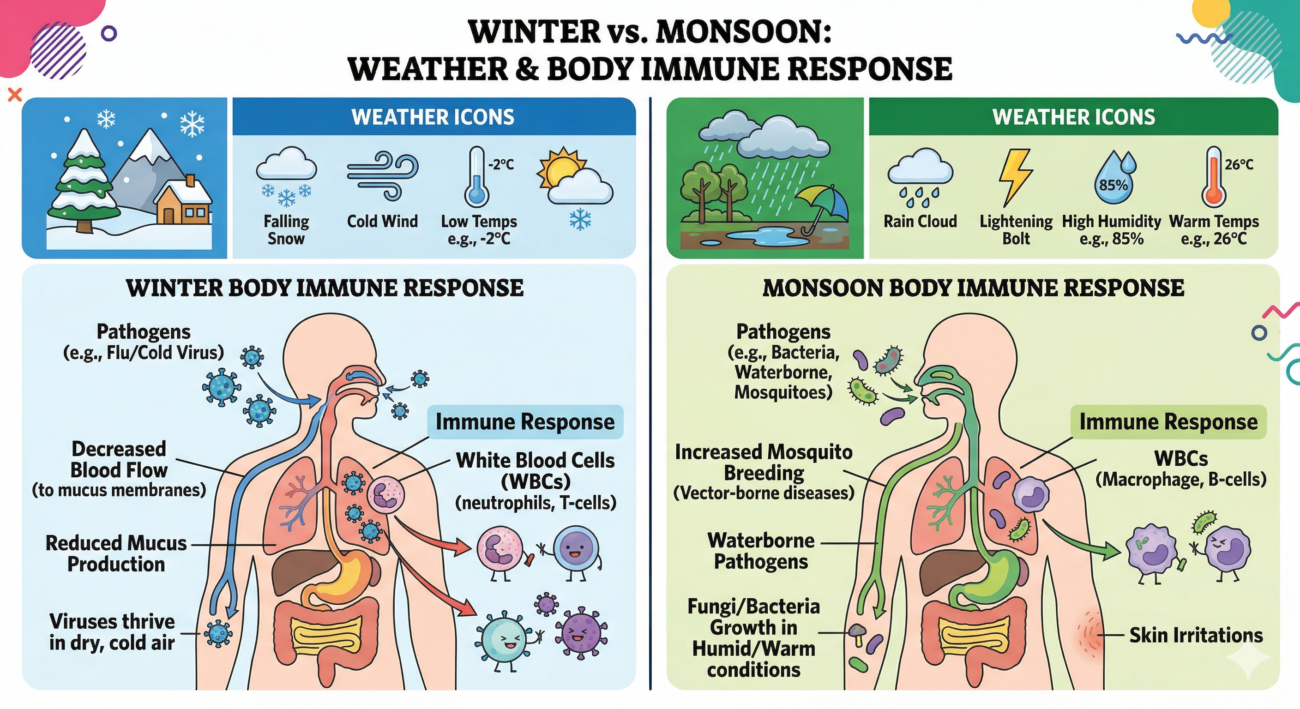
  • Cold air dries out the inside of your nose. A dry nose is less good at blocking viruses.
  • In winter, people stay indoors more. Closed spaces help viruses spread faster.
  • We get less sunlight in winter, which means less Vitamin D. Vitamin D helps your immune system — the body's defence army — stay strong.
  • During monsoon season, moisture and humidity help some germs grow and travel more easily.

The Immune System: Your Body's Superhero Team

Your immune system is like a superhero team living inside your body. When a virus enters, white blood cells rush to fight it. Sometimes, your body raises your temperature (giving you a fever) to make the virus uncomfortable. That's why a mild fever is actually your body working hard!

Common Seasonal & Viral Health Illnesses Kids Face

Let's look at the most common illnesses linked to seasonal and viral health:

1. The Common Cold

Symptoms include a runny nose, sore throat, and sneezing. It usually lasts 7–10 days. There's no special medicine to cure it — your immune system does the job. Rest, water, and warm soup help a lot!

2. Influenza (The Flu)

The flu is stronger than a cold. It causes fever, body aches, tiredness, and sometimes vomiting. It spreads very fast — that's why it's called a contagious disease (kon-TAY-jus), meaning it passes easily from one person to another. A flu vaccine (a special injection) can help protect you every year.

3. Stomach Bugs (Viral Gastroenteritis)

Sometimes called the "stomach flu" (though it's not really flu), this causes nausea, vomiting, and diarrhoea. It often spreads through dirty hands or contaminated food. Washing hands properly is your best weapon here!

How to Protect Your Seasonal Health All Year Round

The good news? You have a LOT of power to protect yourself. Here are the best habits that actually work:

  • Wash your hands for 20 seconds with soap — that's long enough to sing "Happy Birthday" twice!
  • Get 9–11 hours of sleep every night. Sleep is when your immune system recharges.
  • Eat fruits and vegetables rich in Vitamin C (like oranges and guavas). They boost your body's defences.
  • Drink plenty of water. A hydrated body fights off infection better.
  • Exercise regularly. Even 30 minutes of playing outside helps your immunity.
  • Get vaccinated. Vaccines train your immune system to fight specific viruses before they make you sick.
  • Cover your mouth when you cough or sneeze — use your elbow, not your hand!

Seasonal & Viral Health Symptoms — When to Tell an Adult

Most colds and stomach bugs go away on their own. However, sometimes you need to see a doctor. Always tell a parent or teacher if you notice:

  • A very high fever (above 39°C or 102°F) that doesn't go down
  • Difficulty breathing or chest pain
  • Symptoms that get worse after 3–4 days instead of better
  • Extreme tiredness where you can barely get out of bed
  • Vomiting that goes on for more than 24 hours

Remember: asking for help is always the smart and brave thing to do. Therefore, never hide how you're feeling when you're unwell.

Viral Outbreaks & Pandemic Awareness — Staying Safe in a Connected World

Sometimes, a virus spreads so fast that it reaches many countries. This is called an epidemic (ep-ih-DEM-ik) or, if it goes worldwide, a pandemic (pan-DEM-ik). The COVID-19 pandemic is a recent example that affected the whole world.

In addition to personal hygiene, communities and governments work together during outbreaks. Schools may close, people may wear masks, and doctors work extra hard. Your role? Follow the rules, wash your hands, and be kind — because taking care of your health is also taking care of others.

Key Takeaways

  • Seasonal and viral health explains why we get sick more during certain seasons
  • Viruses are tiny germs that spread through sneezing, touching, and contaminated surfaces
  • Your immune system is your body's natural defence — keep it strong!
  • Washing hands, sleeping well, eating right, and getting vaccinated are your best tools
  • Always tell an adult if your symptoms are severe or getting worse
  • During outbreaks, follow community safety rules to protect yourself and others

Frequently Asked Questions About Seasonal & Viral Health

Q1: Can I get the flu even if I had it before?

Yes! Flu viruses change slightly every year, so your body doesn't always recognise the new version. That's why doctors recommend a new flu vaccine each year. However, your immune system does get better at fighting it over time.

Q2: Is it bad to go to school when I have a cold?

It's better to stay home when you're sick. A cold is contagious, which means you can easily spread it to your classmates. Rest at home, get better faster, and protect your friends at the same time!

Q3: Do antibiotics cure the flu or a cold?

No! Antibiotics only work on bacterial infections, not viruses. Taking antibiotics for a viral illness won't help and can actually be harmful. Your body's immune system — with rest and fluids — is the real healer for viral illnesses.

Leave a Reply