


Blog
Dengue Season in Pakistan 2026: Stay Safe & Healthy

Imagine waking up one morning with a very bad headache, a high fever, and pain behind your eyes — so much pain that you can barely open them. Scary, right? This is what thousands of children and adults feel every year when dengue fever hits Pakistan. And in 2026, the dengue season is already knocking on our doors.
But don't worry! Knowledge is your superpower. When you know what dengue is, how to stop it, and what signs to look for, you can protect yourself and your family. Let's learn everything about dengue season in Pakistan 2026 — in the simplest, friendliest way possible.
What Is Dengue Fever and Why Does It Spread in Pakistan Every Year?
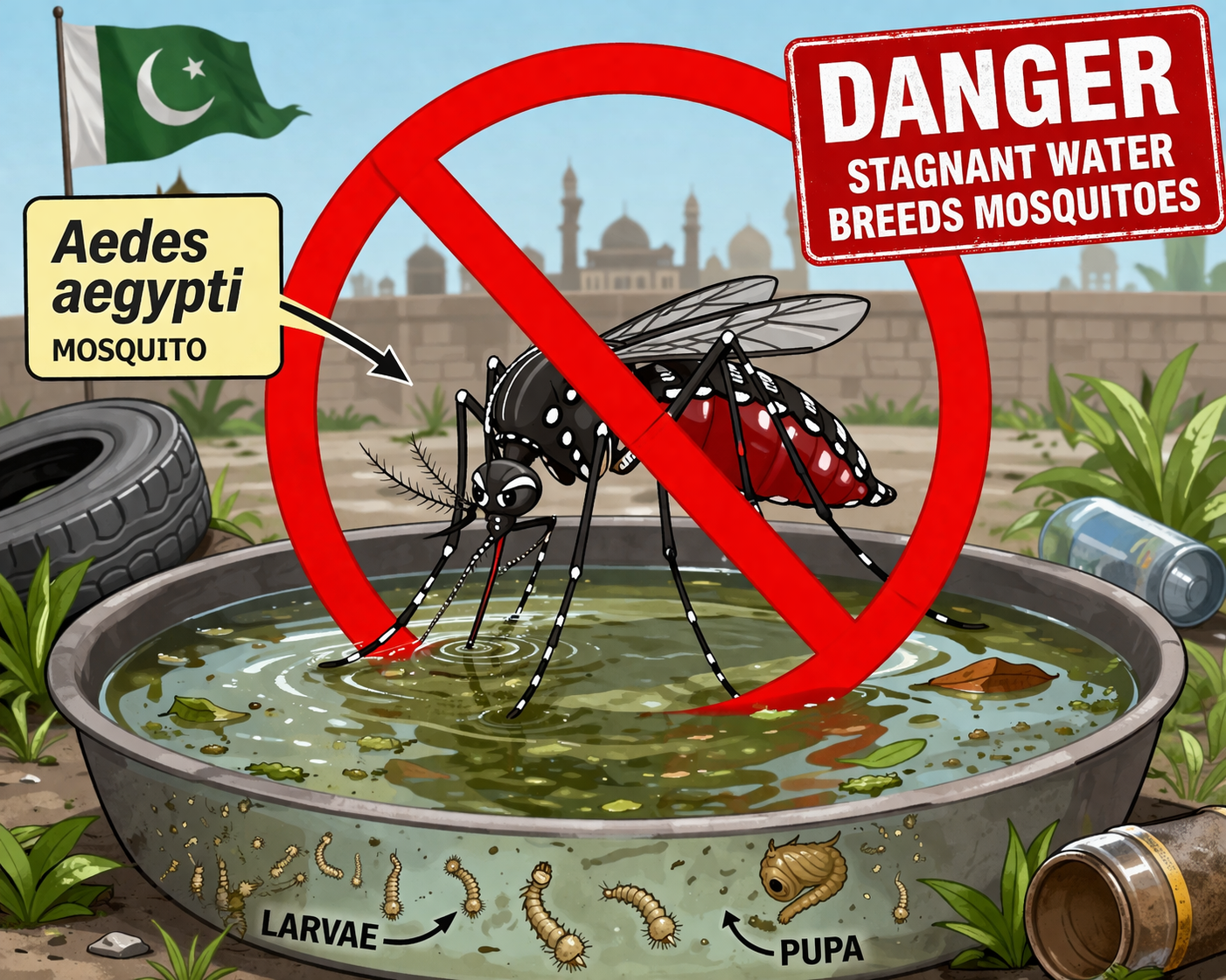
Dengue fever is an illness caused by a virus. A virus is a very tiny germ — so small you cannot see it without a special microscope. This virus does not travel on its own. Instead, it travels inside a mosquito called Aedes aegypti (say it like: "ay-EE-deez ee-JIP-tie").
When this mosquito bites a sick person, it picks up the virus. Then, when it bites a healthy person, it passes the virus on — just like passing a note in class, but a very dangerous one!
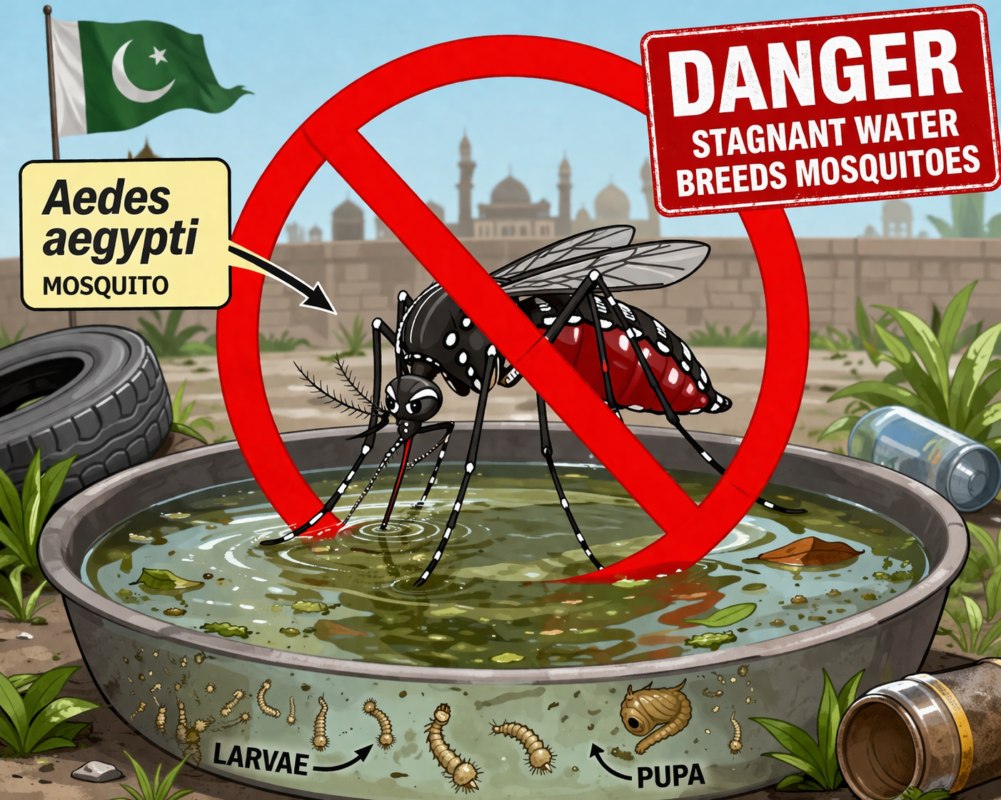
Pakistan is especially affected because of its warm, humid climate, especially during the monsoon season (July to November). Rainwater collects in old tyres, flower pots, open containers, and even bottle caps. These tiny pools of still water become breeding grounds — meaning, the perfect nursery — for Aedes mosquitoes.
Dengue Season in Pakistan 2026 — What's Different This Year?
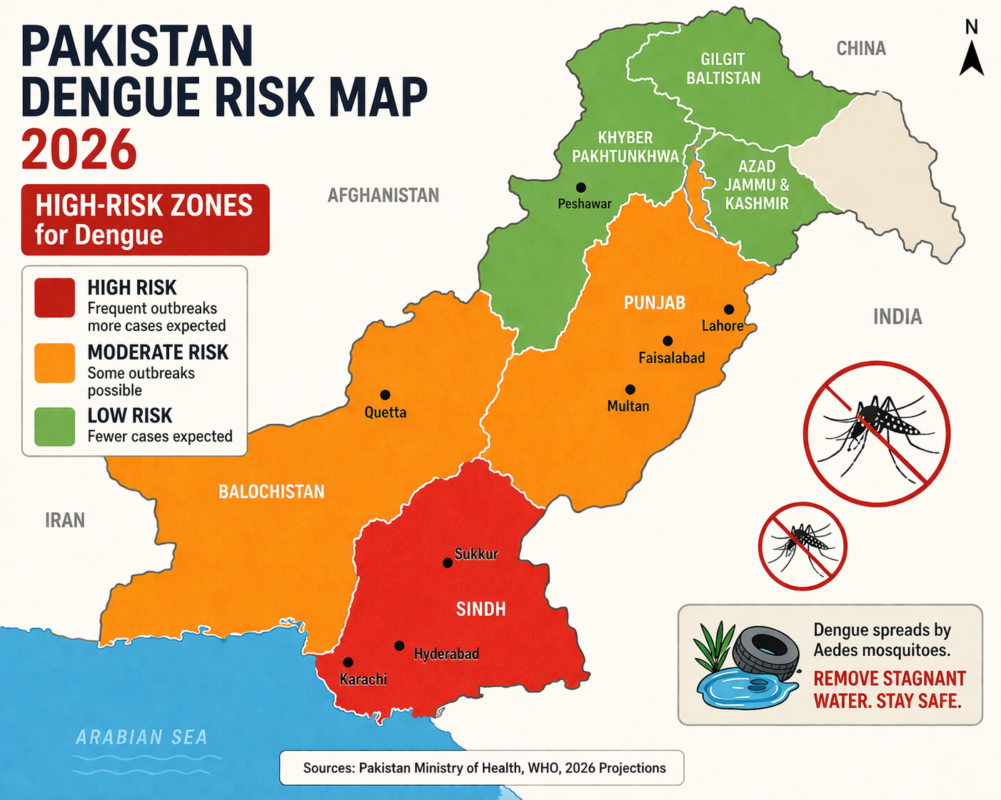
Experts and health officials in Pakistan are keeping a close eye on dengue in 2026. After the heavy rainfall patterns in recent years, more areas across Punjab, Sindh, and Khyber Pakhtunkhwa are reporting dengue cases earlier than usual.
Cities like Lahore, Karachi, Rawalpindi, and Peshawar tend to see the highest number of cases. However, even smaller towns and villages are no longer safe from this disease.
In addition, climate changes mean mosquitoes are surviving longer each year. Therefore, the dengue season is slowly becoming longer — starting earlier and ending later than before.
Health experts from the Pakistan Ministry of National Health Services remind families to stay alert from August through October, as these are typically the peak months.
Early Warning Signs of Dengue — Know Before It Gets Worse
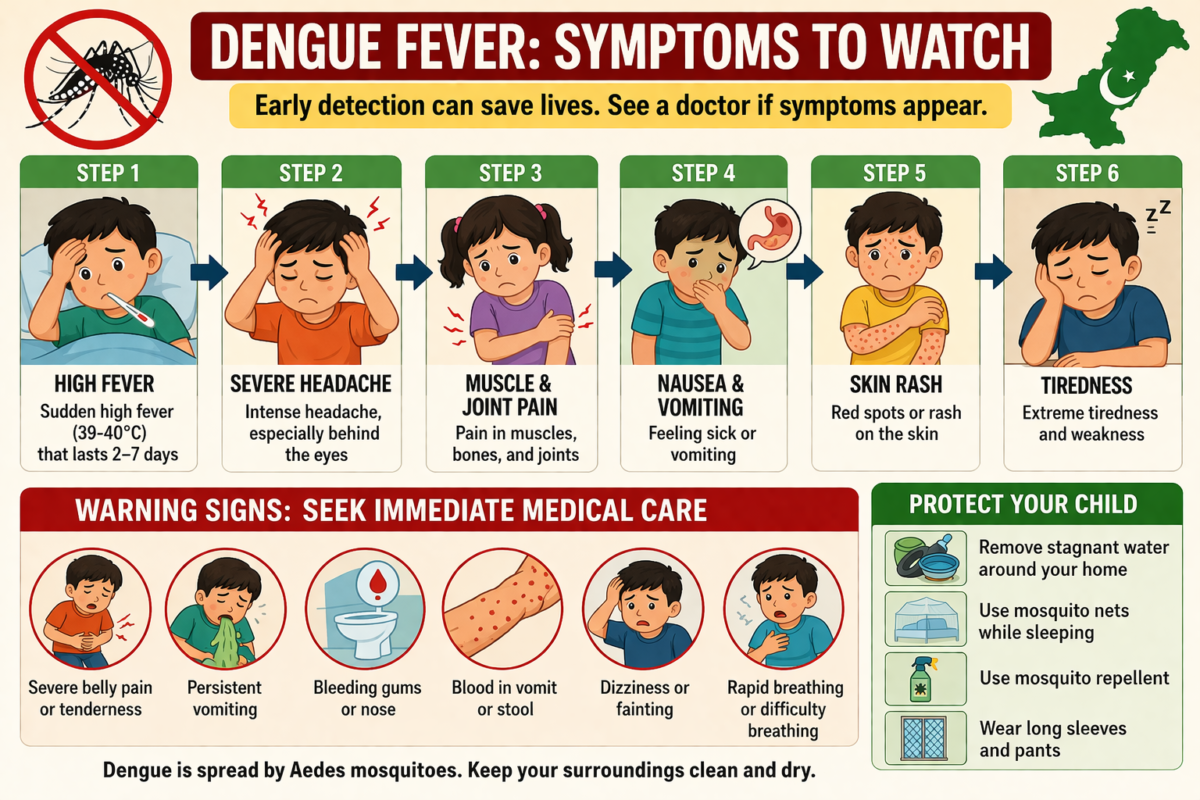
Dengue can be tricky because its early signs feel like a normal flu. However, certain clues help you tell the difference. Here are the most common warning signs of dengue fever to watch out for:
Sudden High Fever
The fever in dengue comes on very suddenly — like a switch being flipped. It usually reaches 104°F (40°C) or higher. A normal cold or flu fever is usually lower and comes on slowly.
Pain Behind the Eyes and in Muscles
Dengue is sometimes called "breakbone fever" — not because your bones actually break, but because the pain in your muscles and joints feels that intense. Pain behind the eyes is a very specific sign that doctors look for.
Skin Rash
After 2–3 days of fever, a patchy red rash may appear on your arms, legs, or chest. Think of it like your skin sending out a distress signal.
Bleeding Signs (Severe Dengue — Emergency!)
In serious cases, called severe dengue or dengue hemorrhagic fever, a person may notice:
- Bleeding from the nose or gums
- Blood in urine or stool
- Bruises appearing for no reason
- Vomiting blood
⚠️ If you see any of these signs, go to a hospital immediately. Do not wait.
Best Medicines and Treatments for Dengue Fever in Pakistan 2026
Here is something very important: there is currently no specific medicine that kills the dengue virus. This sounds scary, but don't panic. Doctors treat dengue by helping your body fight back. Think of it like giving your body an army of helpers!
What Doctors Recommend
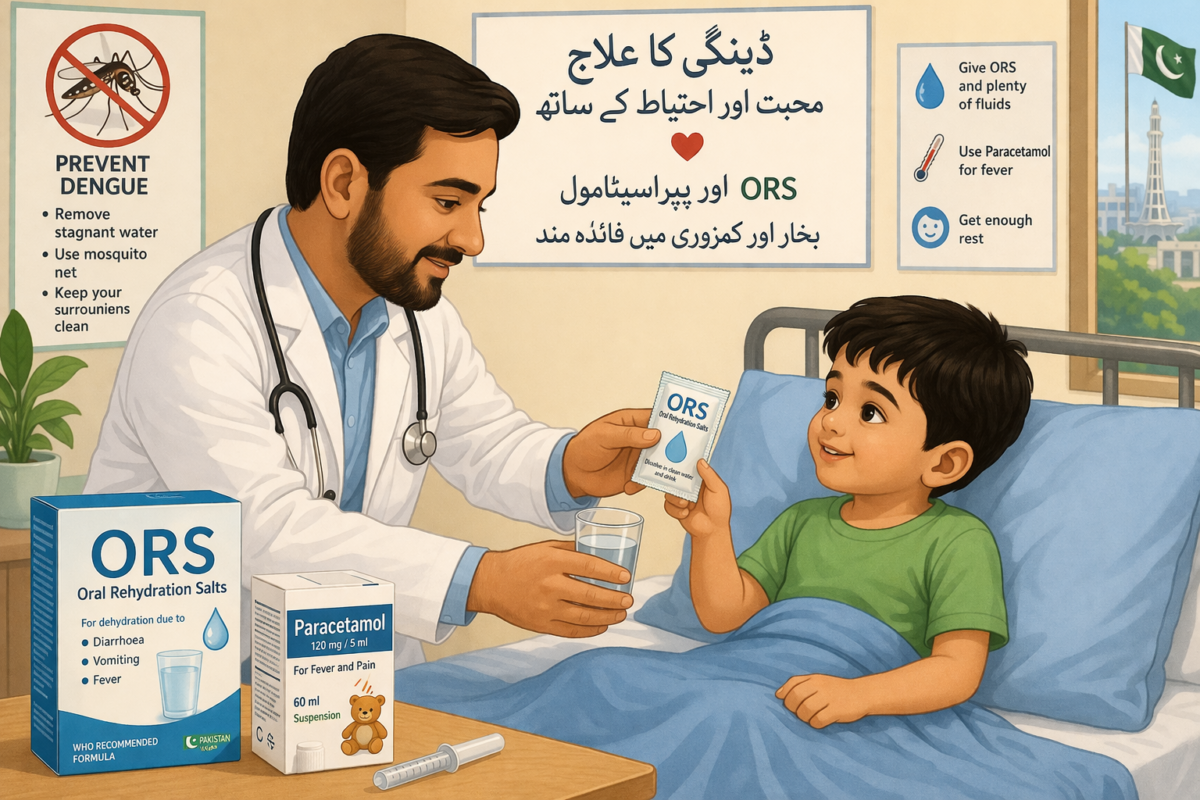
- Paracetamol (like Panadol or Calpol): This reduces fever and pain safely. It is the most commonly used medicine for dengue in Pakistan.
- Oral Rehydration Salts (ORS): Dengue causes dehydration — meaning your body loses too much water. ORS helps put that water and salt back into your body.
- Plenty of fluids: Coconut water, fresh juices, and plain water are your best friends during dengue recovery.
- Complete rest: Your body needs all its energy to fight the virus. No school, no running around — just rest!
What to AVOID
Do NOT take Aspirin or Ibuprofen (like Brufen). These medicines thin your blood, which can be very dangerous if dengue becomes severe. Always ask a doctor before giving any medicine.
Dengue Prevention Tips for Families and School Children in Pakistan
The best medicine is prevention — stopping dengue before it even starts! Here are powerful, easy tips that even a 10-year-old can follow:
At Home
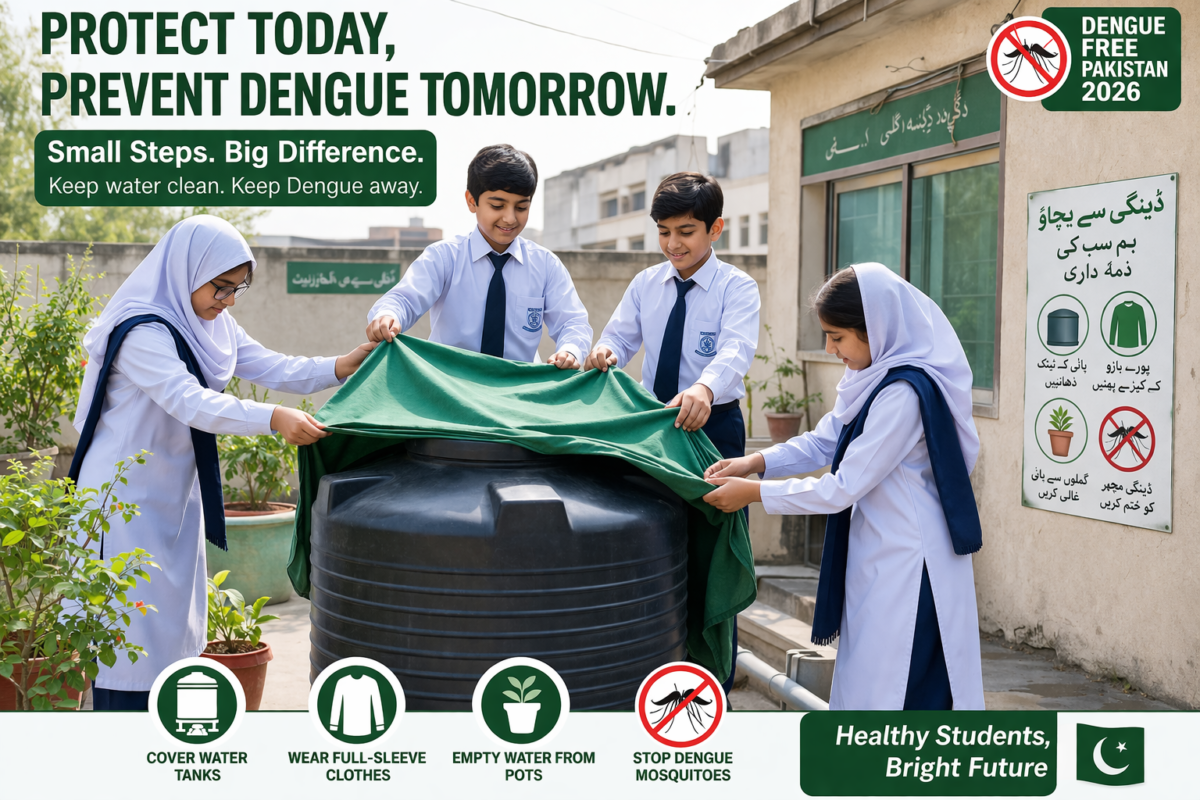
- Empty all containers that hold still water — buckets, old tyres, flower pots, and coolers.
- Cover water storage tanks tightly so mosquitoes cannot lay eggs.
- Use mosquito nets over beds, especially for babies and young children.
- Install window screens to keep mosquitoes outside.
On Your Body
- Wear full-sleeve shirts and long pants during the day, especially in the morning and evening.
- Apply mosquito repellent cream on exposed skin. Ask a parent or guardian to help.
- Avoid wearing dark-coloured clothing outdoors — mosquitoes are more attracted to dark colours.
At School
- Tell your teacher if you see stagnant water near the school building.
- Encourage friends not to litter — empty packets and bottles collect rainwater easily.
- If you feel sudden fever or pain, tell your teacher straight away.
Dengue Season in Pakistan 2026 — Key Takeaways for Young Health Heroes
You have just learned so much! Here is a quick summary to remember:
Key Takeaways Box
| What to Remember | Details |
|---|---|
| What causes dengue? | A virus carried by the Aedes aegypti mosquito |
| When is dengue season? | Peak months: August–October in Pakistan |
| Main warning signs | High fever, eye pain, muscle aches, rash |
| Emergency signs | Bleeding from nose/gums, bruising — go to hospital! |
| Best medicines | Paracetamol + ORS + rest + lots of fluids |
| Avoid | Aspirin and Ibuprofen — dangerous for dengue |
| Best prevention | Remove stagnant water, use repellent, cover up |
FAQ: Your Questions About Dengue Fever Answered Simply
Q1. Can dengue spread from one person to another directly? No! Dengue does not spread by touching, hugging, or being near a sick person. It only spreads through the bite of an infected Aedes mosquito. So you can safely take care of a sick family member.
Q2. Is there a vaccine for dengue in Pakistan? A dengue vaccine does exist, but it is not yet widely available for everyone in Pakistan. Doctors may recommend it for people in very high-risk areas. Ask your family doctor for the latest guidance.
Q3. How long does dengue fever last? Dengue fever usually lasts 5 to 7 days. Most people recover fully at home with rest and fluids. However, if symptoms get worse instead of better after day 3, see a doctor right away.
Conclusion: Be a Dengue Fighter This Season!
Dengue season in Pakistan 2026 is a serious challenge. However, it is one we can face with the right knowledge and simple daily habits. Remember — the Aedes mosquito breeds in your neighbourhood, but you have the power to stop it.
Remove stagnant water. Cover up. Use repellent. Know the warning signs. And if fever strikes, reach for paracetamol and ORS — never Aspirin.
You are not just protecting yourself. You are protecting your family, your friends, and your whole community. That makes you a true health hero!
Call to Action
Try this today! Walk around your home with a parent and find any containers holding still water. Empty them out! Then share this article with a friend and help them become a dengue fighter too.
Tell us in the comments: What dengue prevention step will YOU take first?